1999: PhD in Pharmacology and Toxicology, University of Milan
1989: Degree in Biological Science, University of Milan
2019 – Now: Senior Researcher – CNR, Institute of Agricultural Biology and Biotechnology, Milan
2001 – 2019: Researcher – CNR, Institute of Agricultural Biology and Biotechnology, Milan
2006 – 2014: Professor on annual contract in Cellular Engineering – University of Milano, Faculty of Agriculture, for the Master Degree in Plant Biotechnology
2001 – 2006: Tutoring activity for the Master Degree in Plant Biotechnology – University of Milano, Faculty of Agriculture
1995 – 1997: Lecturer – Theoretical – Practical courses on Biotechnology Applied to Pharmacology, University of Milan – Faculty of Medicine and Surgery

EU-IBISBA is a pan-European research infrastructure dedicated to Industrial Biotechnology that provides a single access point to researchers from academia and industry across the globe to integrated services for end-to-end bioprocess development. By federating European expertise and state-of-the-art research and development facilities, we promote standardization and best data practices as core elements of service reproducibility and interoperability. In doing so, EU-IBISBA accelerates the production and translation of cutting-edge knowledge into innovation for biomanufacturing.
IBISBA-IT serves as the Italian Node of EU-IBISBA, playing a distinct role across four key domains: Synthetic Biology, Green Chemistry, Sustainable Bioenergy, and Functional Food. IBISBA-IT contributes to the overarching goals of EU-IBISBA by bolstering the Italian scientific research in Industrial Biotechnology, supporting national and local authorities, and fostering training and educational initiatives.


The project includes:


EU-IBISBA is a distributed research infrastructure concept that will deliver translational research and innovation services to the research community and industry alike. Its aim is to accelerate the movement of knowledge and early stage research results towards maturity and uptake for further development by industrial R&I. EU-IBISBA’s expertise is within the field of industrial biotechnology and focuses on the integrated development of bioprocesses, using a multidisciplinary approach and advanced technology such as synthetic biology.
PREP-IBISBA intervenes just after the addition of EU-IBISBA on the ESFRI roadmap and as a follow-up to an ongoing H2020 INFRAIA starting community project entitled IBISBA 1.0. The aim of PREP-IBISBA is to create the conditions to launch EU-IBISBA. It will deliver all the conceptual elements necessary to finalize the science and technology case and define the business model, establish a long range financial plan and identify alternative legal frameworks suitable to deliver EU-IBISBA. Overall, the work will lead to the creation of a legal entity, preferentially either an ERIC or another suitable legal instrument.

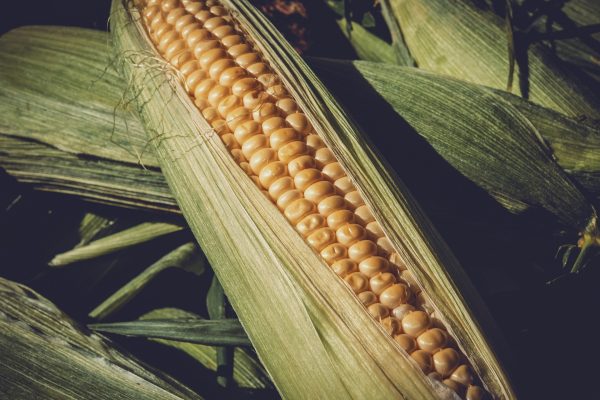
The seed of the maize plant (Zea mays, aka corn) contains zeins, seed storage proteins located within its cells’ Endoplasmic Reticulum (ER) lumen. The maize major seed storage protein, Zea mays 27g-zein (Zm27g-zein), polymerises in the maize seed ER to form large cages – which then accumulate in their interior other maize seed storage proteins, thus providing structural scaffold to the protein body (PB) which is the major food source of the seed. The N-terminus of Zm27g-zein is necessary for the polymerisation to form the PB cage – and the C-terminus of the protein folds as a 2S-albumin fold – but no structures are available for the whole protein nor for either domain in isolation. Most importantly, the way Zm27g-zein gives rise to the molecular structure of the PB cage is completely unknown, including questions such as what intermolecular Zm27g-zein : Zm27g-zein covalent and non-covalent interactions form the PB cage; are there any pores in the PB cage and if so of what size; or the relative orientation of the N- and C-termini in the context for the fully formed PB cage (are Zm27g-zein N-/C- termini in the PB interior, or the exterior, or both?). These questions about the Zm27g-zein PB cage are very important for applications using in the fields of food science, recombinant protein expression, pharmacology and nanotechnology. We shall answer these questions using confocal microscopy, X-ray crystallography and Cryo-EM.

The massive synthesis of seed storage proteins (SSP) during seed development causes a rapid increase in the workload of the protein folding machinery in the endoplasmic reticulum (ER), triggering the unfolded protein response (UPR), a signaling pathway that maintains ER proteostasis. Despite this monitoring, a relevant proportion of newly synthesized SSPs are degraded, suggesting a failure in proper folding, which can be exacerbated by increasingly frequent adverse environmental conditions. The major UPR sensor in the ER is the chaperone protein BiP of the HSP70 family. By competitively interacting with unfolded polypeptides and signal transducers, BiP regulates the UPR. We have shown that the extent of interaction with BiP is specific to each individual SSP (Brocca et al, Plant Physiol. 2021). BiP also interacts with other ER folding factors, but the relationships with SSP synthesis and stress response are largely unknown.
Using cutting-edge proteomic and cell biology approaches, PROSPER aims at identifying which elements of the ER folding machinery play a key role in supporting the synthesis of the different SSPs.
The project will provide frontier knowledge to develop new strategies for improving the nutritional quality of seeds

Plant, animal and microbial genetic resources and adaptation to climatic changes
The resilience of agricultural and forest ecosystems under stressful conditions generated by climate change requires the enhancement and exploitation of genetic resources through state-of-the-art conservation strategies, combined with in-depth genome characterization and high-throughput phenotyping.
Activities include large-scale sequencing of accessions/breeds/strains, extensive marker-based genome descriptions, elucidation of the (pan)genome, deep phenotyping, and multi-omics characterization.
The resulting information, processed through advanced methods for the analysis, interpretation, archiving, and management of complex data, will highlight superior alleles/haplotypes, identify beneficial interactions across a variety of conditions, and define conservation units.

IBISBA 1.0 provides a coordinated network of research facilities to promote R&D in bioprocess development and support the bioeconomy. The facilities cover a wide range of experimental and in silico operations and disciplines, and together represent an R&D continuum to build quality biomanufacturing processes for industrialisation. IBISBA 1.0 aims at establishing an interoperable network of infrastructures capable of proposing R&D services to industrial biotechnology professionals. In this respect, IBISBA 1.0 has launched a Transnational Access (TNA) programme, which is conducted in the framework of open calls for projects.


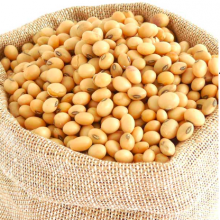
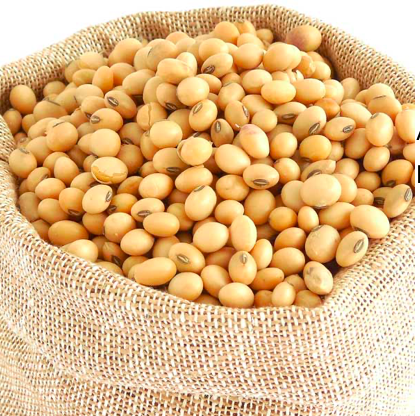
The project includes the development of a rapid assay for the determination of trypsin inhibitors in different soybean matrices (extracted soybean, extruded soybean, fermented concentrated protein soybean); the development of a rapid assay for the determination of allergens in different soya matrices; the molecular characterization of 3 soya matrices (extracted soy flour, extruded soy, fermented protein soy).

Protein function can be understood through protein structure. The structure of a protein can inform the design of modifications resulting in increase or reduction of activity, depending on the desired goal. The service we are developing is a structure determination pipeline (from gene to protein structure). The design of synthetic proteins needs both validation by structure determination and it need to be inspired by structures of the proteins – either the ones to be modified or the products of the initial stages of design. The user will provide either the gene encoding the protein of interest, or vector/expression system and purification protocol for producing it recombinantly, or purified protein. The service will provide either of the following deliverables:

The most critical challenges currently faced by our society include pollution, land use and climate change, and their impacts on biodiversity and ecosystem integrity, which urgently require quantitative knowledge to be translated into actionable strategies. Given the complexity of these challenges, a multidisciplinary Earth System approach is essential, combining field and laboratory measurements, experimental analyses, data management and modeling tools across interconnected environmental domains. In this framework, ITINERIS was established as a thematic network bringing together 22 environmental Research Infrastructures to build an integrated national system for the observation and study of atmospheric, marine, terrestrial biosphere and geosphere processes.
Within WP6 – Terrestrial Biosphere, CNR-IBBA contributes to the development of harmonized and distributed platforms for metagenomic analyses, biomolecule production, and structural and functional characterization.
By promoting interoperability and data standardization in line with the IBISBA-EU roadmap, ITINERIS supports a long-term, innovative vision of Italian and European environmental research.

sPATIALS3 is a technological and research hub involving 12 CNR Institutes belonging to 4 different Departments and 4 companies. Main objectives will be: obtainment of innovative food products improved for their nutritional and functional properties; provision and implementation of precision technologies to guarantee products quality, safety and traceability; development of innovative and eco-sustainable smart– and active-packaging to minimize and reuse wastes, where possible, and to increase food preservability; provision to consumers and producers of tools for results exploitation.

With a multidisciplinary approach, Nutrage aims to promote solutions and strategies for active and healthy aging, which have significant implications for the future, well-being, and social cohesion of the country. Evidence suggests that nutrition plays a key role in promoting the prevention and delaying the onset of major aging-related diseases. Therefore, the project intends to develop new foods with high nutritional value, new dietary regimens, and specific personalized nutrition programs, and to promote new pathways to support the health, well-being, and safety of the most vulnerable populations. The specific objectives of the project are: