StaffAldo Ceriotti


Informations


E-mail
aldo.ceriotti@cnr.it

Phone
+39 0223699444

Office
Milano

Research area
BIOTEC, BIOGEN, BIOCEL


Ceriotti Aldo

Associate scientist

Projects in progress

EU-IBISBA - European Industrial Biotechnology Innovation and Synthetic Biology Accelerator
Start date: 01/01/2017   End date: 31/12/2027

Unione Europea

Milano, Lodi   Website

Emanuela Pedrazzini

Project duration:
01/01/2017 - 31/12/2027
Financing body:
Unione Europea
Project research leader:
Emanuela Pedrazzini
Headquarters:
Milano, Lodi
Project website:
Website

EU-IBISBA - European Industrial Biotechnology Innovation and Synthetic Biology Accelerator


EU-IBISBA is a pan-European research infrastructure dedicated to Industrial Biotechnology that provides a single access point to researchers from academia and industry across the globe to integrated services for end-to-end bioprocess development. By federating European expertise and state-of-the-art research and development facilities, we promote standardization and best data practices as core elements of service reproducibility and interoperability. In doing so, EU-IBISBA accelerates the production and translation of cutting-edge knowledge into innovation for biomanufacturing.

IBISBA-IT serves as the Italian Node of EU-IBISBA, playing a distinct role across four key domains: Synthetic Biology, Green Chemistry, Sustainable Bioenergy, and Functional Food. IBISBA-IT contributes to the overarching goals of EU-IBISBA by bolstering the Italian scientific research in Industrial Biotechnology, supporting national and local authorities, and fostering training and educational initiatives.

Projects completed

PREP-IBISBA - Industrial Biotechnology Innovation and Synthetic Biology Accelerator - Preparatory Phase
Start date: 01/01/2020   End date: 31/12/2023

Unione Europea

Milano   Website

Emanuela Pedrazzini, Aldo Ceriotti

Project duration:
01/01/2020 - 31/12/2023
Financing body:
Unione Europea
Project research leader:
Emanuela Pedrazzini, Aldo Ceriotti
Headquarters:
Milano
Project website:
Website

PREP-IBISBA - Industrial Biotechnology Innovation and Synthetic Biology Accelerator - Preparatory Phase


EU-IBISBA is a distributed research infrastructure concept that will deliver translational research and innovation services to the research community and industry alike. Its aim is to accelerate the movement of knowledge and early stage research results towards maturity and uptake for further development by industrial R&I. EU-IBISBA’s expertise is within the field of industrial biotechnology and focuses on the integrated development of bioprocesses, using a multidisciplinary approach and advanced technology such as synthetic biology.

PREP-IBISBA intervenes just after the addition of EU-IBISBA on the ESFRI roadmap and as a follow-up to an ongoing H2020 INFRAIA starting community project entitled IBISBA 1.0. The aim of PREP-IBISBA is to create the conditions to launch EU-IBISBA. It will deliver all the conceptual elements necessary to finalize the science and technology case and define the business model, establish a long range financial plan and identify alternative legal frameworks suitable to deliver EU-IBISBA. Overall, the work will lead to the creation of a legal entity, preferentially either an ERIC or another suitable legal instrument.

InterOmics – Subproject: Omics Technologies for the Valorization of Durum Wheat Germplasm
Start date: 29/07/2014   End date: 31/12/2018

MIUR

Milano, Lodi   Website

Aldo Ceriotti

Project duration:
29/07/2014 - 31/12/2018
Financing body:
MIUR
Project research leader:
Aldo Ceriotti
Headquarters:
Milano, Lodi
Project website:
Website

InterOmics – Subproject: Omics Technologies for the Valorization of Durum Wheat Germplasm


The project is divided into three phases:

1) Launching an initiative to sequence the durum wheat genome; this objective will be pursued through complementary strategies that, taken together, will address the two main challenges associated with sequencing this species’ complex genome (the presence of two highly similar genomes and a high percentage of repetitive sequences).

2) Characterizing the varieties used for genomic studies at the proteomic and metabolomic levels. The results of this analysis will be integrated with those generated by genomic analysis, highlighting the presence of post-transcriptional and post-translational events in protein biosynthesis and providing insights into the activation of specific metabolic pathways.

3) Phenotyping of 150 accessions already genotyped (SNP profiles) and derived via single seed descent from landraces/ecotypes. This collection is housed at the Bari branch of the Institute of Biosciences and Bioresources of the National Research Council. These materials will enable association mapping analysis between SNPs and morphophysiological characteristics of plants, thus providing the basis for using these genetic resources in the development of new hard fruit varieties

BIO-MEMORY
Start date: 15/10/2021   End date: 15/02/2024

CNR

Milano, Lodi, Pisa, Roma Montelibretti
Flavia Pizzi, Aldo Ceriotti

Project duration:
15/10/2021 - 15/02/2024
Financing body:
CNR
Project research leader:
Flavia Pizzi, Aldo Ceriotti
Headquarters:
Milano, Lodi, Pisa, Roma Montelibretti

BIO-MEMORY


The project is organized in 3 main activities:

1) Implementation and updating of the BioGenRes network of biobanks, with a focus on nationally/internationally recognized collections of animal, plant or microorganism species samples (animal and plant germplasm banks, microbial strain libraries of pathogenic/toxigenic organisms, nematodes, soil and water microflora and microorganisms used in agro-industry and food (e.g. microbial starters for fermentations)).

2) Replication (rejuvenation) and expansion of material stored in collections. For plant and microbial collections: multiplication of accessions for which a small amount of material is available and rejuvenation of accessions whose seed viability data are below the expected standards (> 85%). For animal collections of zootechnical interest: collection and freezing of genetic material of local breeds to complete sampling carried out in previous projects or expansion of the number of species and breeds stored in cryobanks.

3) Biochemical, molecular, metabolic, functional and phenotypic characterization of the material conserved in the biobanks of the BioGenRes network, also in order to carry out association studies and to identify markers associated with traits linked to production and/or adaptation to biotic and abiotic stress factors.

PRIN AGRITECH (SPOKE 1) - Plant, animal and microbial genetic resources and adaptation to climatic changes
Start date: 01/09/2022   End date: 30/04/2026

MUR

Milano, Lodi, Pisa, Roma Montelibretti   Website

Alessandra Stella, Emanuele Capra

Project duration:
01/09/2022 - 30/04/2026
Financing body:
MUR
Project research leader:
Alessandra Stella, Emanuele Capra
Headquarters:
Milano, Lodi, Pisa, Roma Montelibretti
Project website:
Website

PRIN AGRITECH (SPOKE 1) - Plant, animal and microbial genetic resources and adaptation to climatic changes


Plant, animal and microbial genetic resources and adaptation to climatic changes

The resilience of agricultural and forest ecosystems under stressful conditions generated by climate change requires the enhancement and exploitation of genetic resources through state-of-the-art conservation strategies, combined with in-depth genome characterization and high-throughput phenotyping.

Activities include large-scale sequencing of accessions/breeds/strains, extensive marker-based genome descriptions, elucidation of the (pan)genome, deep phenotyping, and multi-omics characterization.

The resulting information, processed through advanced methods for the analysis, interpretation, archiving, and management of complex data, will highlight superior alleles/haplotypes, identify beneficial interactions across a variety of conditions, and define conservation units.

PANWHEATGRAIN - Grain Pangenomics for Durum Wheat Sustainable Production
Start date: 08/05/2022   End date: 08/05/2025

MUR

Milano
Aldo Ceriotti

Project duration:
08/05/2022 - 08/05/2025
Financing body:
MUR
Project research leader:
Aldo Ceriotti
Headquarters:
Milano

PANWHEATGRAIN - Grain Pangenomics for Durum Wheat Sustainable Production


Italy and Mediterranean countries import large amounts of wheat using N-based fertilizers whose artificial production accounts for 70% of greenhouse gas emissions, the main cause of global warming.

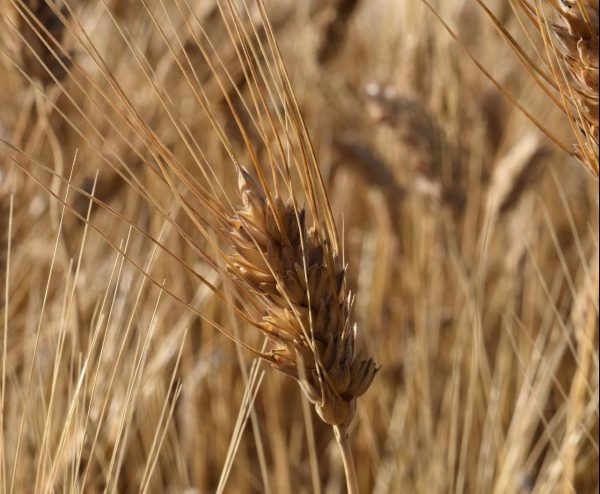
The PanWheatGrain project adopted a systemic approach to decipher the genetic and functional landscape underpinning grain size and nutritional quality toward a more effective exploitation of native genetic variability in tetraploid wheat (Triticum turgidum spp.). The project aimed to sequence the genomes of 10 of accessions that capture a large variation of tetraploid wheat for gain size and quality. These cultivars have been investigated for: nitrogen use efficiency, grain protein and starch accumulation, grain protein deviation, and yield. Genomic, transcriptomic and metabolomic analyses allowed us to decipher the biosynthetic/metabolic pathways and the gene regulatory networks relevant for grain protein and starch content, grain protein deviation, grain size under optimal and sub-optimal nitrogen levels. Gene editing was also used to generate new allelic variants at key regulatory effector targets.

PRIN 2022 NEWROOTS - Evaluation & cloning of a major root angle QTL for a sustainable production in durum wheat
Start date: 12/10/2023   End date: 28/02/2026

MUR

Milano, Roma Montelibretti
Raul Pirona

Project duration:
12/10/2023 - 28/02/2026
Financing body:
MUR
Project research leader:
Raul Pirona
Headquarters:
Milano, Roma Montelibretti

PRIN 2022 NEWROOTS - Evaluation & cloning of a major root angle QTL for a sustainable production in durum wheat


The NEWRoot project aims to generate genetic and functional information in durum wheat (Triticum turgidum ssp. durum) on aspects of root system architecture and nutrient perception/uptake. This will be achieved through the development of more resilient plants, adapted to the pressing challenges posed by climate change, and more efficient in nitrogen use, whose production accounts for 70% of greenhouse gas emissions. The project has three main objectives:

  1. Identification and characterization of genes and regulatory networks underlying root system architecture in response to optimal or sub-optimal nitrogen levels
  2. Identification of novel root phenotypes potentially associated with the adaptation of durum wheat to different agronomic management practices, through the screening of natural variation in root system architecture (RSA) in response to nitrogen levels within durum wheat germplasm
  3. Field evaluation of the effects of root angle on durum wheat performance under conditions of limited water and nitrogen availability


E-crops - Technologies for Sustainable Digital Agriculture
Start date: 01/10/2020   End date: 31/03/2023

MIUR

Milano
Aldo Ceriotti, Elena Baldoni

Project duration:
01/10/2020 - 31/03/2023
Financing body:
MIUR
Project research leader:
Aldo Ceriotti, Elena Baldoni
Headquarters:
Milano

E-crops - Technologies for Sustainable Digital Agriculture


E-crops intends to contribute to the development and dissemination of Agriculture 4.0 in Southern Italy by developing innovative technologies and methodologies to manage crops and the risks to which they are exposed. This will include integrating new technologies into the production chain through a series of pilot applications capable of monitoring and managing processes according to company objectives. Decision-making support tools will be developed through close interaction between business needs and monitoring and analysis methodologies, enabling the management of spatial variability in the field both to increase the quality of the final product (in high-value-added supply chains) and to optimize management for sustainability (in industrial supply chains). E-crops will employ an HTP phenotyping infrastructure, a leading technology in Southern Italy and unique in Italy, to build digital representations of crops in a controlled environment that will increase the level of knowledge obtainable with non-invasive survey techniques. The market and employment benefits are threefold: new markets for technology producers; Increased competitiveness and profitability combined with the hiring of new professionals; opportunities for the creation of start-ups bridging technology and agriculture.

Identification of a rapid test for anti-nutritional factors in vegetable protein flours
Start date: 08/05/2019   End date: 21/09/2019

Fa.Ma.Vit. S.p.A.

Milano
Emanuela Pedrazzini

Project duration:
08/05/2019 - 21/09/2019
Financing body:
Fa.Ma.Vit. S.p.A.
Project research leader:
Emanuela Pedrazzini
Headquarters:
Milano

Identification of a rapid test for anti-nutritional factors in vegetable protein flours


The project includes the development of a rapid assay for the determination of trypsin inhibitors in different soybean matrices (extracted soybean, extruded soybean, fermented concentrated protein soybean); the development of a rapid assay for the determination of allergens in different soya matrices; the molecular characterization of 3 soya matrices (extracted soy flour, extruded soy, fermented protein soy).

PNRR ITINERIS - Development of a structural biology platform as part of the IBISBA European research infrastructure network
Start date: 01/01/2022   End date: 30/04/2024

MUR

Milano
Pietro Roversi

Project duration:
01/01/2022 - 30/04/2024
Financing body:
MUR
Project research leader:
Pietro Roversi
Headquarters:
Milano

PNRR ITINERIS - Development of a structural biology platform as part of the IBISBA European research infrastructure network


Protein function can be understood through protein structure. The structure of a protein can inform the design of modifications resulting in increase or reduction of activity, depending on the desired goal. The service we are developing is a structure determination pipeline (from gene to protein structure). The design of synthetic proteins needs both validation by structure determination and it need to be inspired by structures of the proteins – either the ones to be modified or the products of the initial stages of design.  The user will provide either the gene encoding the protein of interest, or vector/expression system and purification protocol for producing it recombinantly, or purified protein.  The service will provide either of the following deliverables:

  • Crystal structure.
  • Cryo-EM structure (for targets with Molecular Weight MW greater than 200 kDa).
PNRR ITINERIS - Italian Integrated Environmental Research Infrastructures System
Start date: 01/11/2022   End date: 30/04/2026

MUR

Milano, Lodi, Pisa   Website

Bianca Castiglioni

Project duration:
01/11/2022 - 30/04/2026
Financing body:
MUR
Project research leader:
Bianca Castiglioni
Headquarters:
Milano, Lodi, Pisa
Project website:
Website

PNRR ITINERIS - Italian Integrated Environmental Research Infrastructures System


The most critical challenges currently faced by our society include pollution, land use and climate change, and their impacts on biodiversity and ecosystem integrity, which urgently require quantitative knowledge to be translated into actionable strategies. Given the complexity of these challenges, a multidisciplinary Earth System approach is essential, combining field and laboratory measurements, experimental analyses, data management and modeling tools across interconnected environmental domains. In this framework, ITINERIS was established as a thematic network bringing together 22 environmental Research Infrastructures to build an integrated national system for the observation and study of atmospheric, marine, terrestrial biosphere and geosphere processes.

Within WP6 – Terrestrial Biosphere, CNR-IBBA contributes to the development of harmonized and distributed platforms for metagenomic analyses, biomolecule production, and structural and functional characterization.

By promoting interoperability and data standardization in line with the IBISBA-EU roadmap, ITINERIS supports a long-term, innovative vision of Italian and European environmental research.

SURF - Selection and development of genetic materials for the resistance to virus diseases of wheat
Start date: 01/07/2020   End date: 30/12/2023

Regione Lombardia

Milano   Website

Aldo Ceriotti

Project duration:
01/07/2020 - 30/12/2023
Financing body:
Regione Lombardia
Project research leader:
Aldo Ceriotti
Headquarters:
Milano
Project website:
Website

SURF - Selection and development of genetic materials for the resistance to virus diseases of wheat


The project SURF aims to select and develop genetic materials of durum wheat (Triticum durum Desf.) for the resistance to viruses, through the use of new experimental approaches and innovative scientific technologies. The first objective of the project is the identification of durum wheat genotypes resistant to the soil-borne cereal mosaic virus (SBCMV) and the identification of resistance loci, using an approach of Genome Wide Association Study (GWAS). A panel of durum wheat genotypes already genotyped will be used. A further objective of the project is the development of durum wheat lines carrying an inactive form of a susceptibility gene for Bymovirus, through genome editing approaches. In particular, in barley the variant of a gene coding for a protein-disulfide-isomerase (PDIL5-1) causes an innate resistance to different strains of Bymovirus. The durum wheat ortholog gene of this PDIL5-1 will be used for genome editing. The resistance traits that will be identified in the project will be then available for durum wheat breeding programs.

sPATIALS3 - Improvement of agrifood productions and innovative technologies for a safer and more secure and sustainable nutrition
Start date: 01/02/2020   End date: 31/10/2022

Regione Lombardia

Milano, Lodi
Francesca Sparvoli

Project duration:
01/02/2020 - 31/10/2022
Financing body:
Regione Lombardia
Project research leader:
Francesca Sparvoli
Headquarters:
Milano, Lodi

sPATIALS3 - Improvement of agrifood productions and innovative technologies for a safer and more secure and sustainable nutrition


sPATIALS3 is a technological and research hub involving 12 CNR Institutes belonging to 4 different Departments and 4 companies. Main objectives will be: obtainment of innovative food products improved for their nutritional and functional properties; provision and implementation of precision technologies to guarantee products quality, safety and traceability; development of innovative and eco-sustainable smart– and active-packaging to minimize and reuse wastes, where possible, and to increase food preservability; provision to consumers and producers of tools for results exploitation.

Istituto

Search website