1997–2000: Doctor of Philosophy (Ph.D.) – University of Florence Animal Breeding
1996–1997: MSc Universidade Federal Do Cearà, Brasil, Animal Breeding
1987–1994: Bachelor degree – University of Florence – Tropical Agriculture
2018–2019: Visiting Scientist at Animal Science Department, NC State, Raleigh (USA)
2017–Present: Researcher at the National Research Council Institute of Agricultural Biology and Biotechnology, Milan office
2016–2017: Chief Geneticist Italian Breeders Association, Rome (Italy)
2015-2017: Visiting Professor at Department of Animal Science – Federal University of Ceara’, Fortaleza
2013–2016: Research Associate at Italian National Research Council CNR – National Research Council (Lodi Unit)
2011–2013: Researcher/Geneticist Italian Holstein Breeders Association
2009–2011: Researcher/Statistician Parco Tecnologico Padano
2000–2008: Researcher/Geneticist Italian Holstein Breeders Association
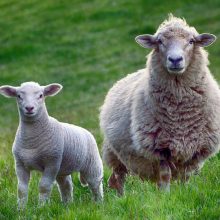
The joint research project LearningFromSheep copes with the use of advanced deep learning models to develop an innovative system for counting differential somatic cells—an innovative proxy for assessing milk quality and udder health—and to automate the analysis of microscope images, thereby eliminating the need for manual counting and drastically reducing data processing times.

The BIOGENVER project was established to safeguard and promote the Nera di Verzasca goat, a native Lombardy breed that is at severe risk of extinction. Coordinated by the IBBA-CNR, the project involves the Department of Medical-Veterinary Sciences of the University of Parma and three custodian farms, with the support of AssoNaPa, the breed’s official breeding association.
Through genotyping and pedigree analysis, mating plans based on Optimal Contributions will be developed to reduce inbreeding and relatedness, preserve genetic variability, and improve production quality. Analyses of milk composition and cheese-making performance will help guide breeding decisions, while also enhancing the value of traditional products such as Formaggella del Luinese PDO.
The selection of new breeding animals will also make it possible to expand and diversify the collection of semen already preserved in the IBBA-CNR Animal Germplasm Cryobank. Farmers will be directly involved in animal evaluations and in the shared definition of breeding objectives.
BIOGENVER therefore aims to integrate biodiversity conservation, production quality, sustainability, and territorial identity, developing an approach to the conservation and enhancement of the Nera di Verzasca breed that can also serve as a model for other local goat breeds.

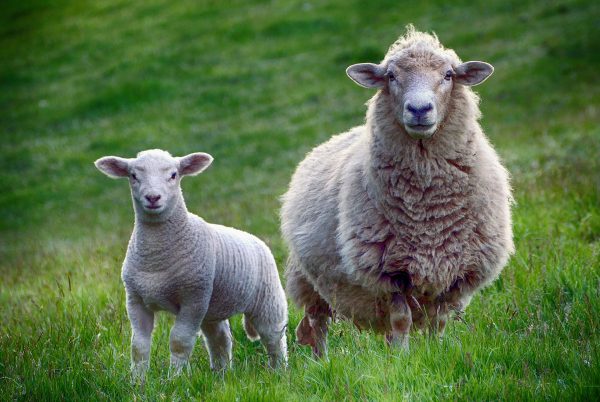
The aim of the project was the management of the genetic variability of the local Italian sheep and goat breeds through the choice of donors to be stored in the Cryobank and therefore the collection and conservation of their genetic material. For this purpose, the donors of genetic material to be stored in the Criobank have been identified in the Massese sheep, Langhe sheep, Gentile sheep of Puglia, Garganica goat and Nicastrese goat breeds. The seminal material was then collected using reproductive biotechnologies, such as the extraction of epididymal spermatozoa procedures, that had previously been developed in the IBBA laboratories in Lodi. The material collected in the project can be distributed to breeders for the insemination of the females for proper management of the genetic variability of their herds and more generally of the whole breed.

Over the centuries, the chestnut tree, cultivated for its fruits and timber, has become an essential element of subsistence for many societies in mountain and sub-mountainous areas, revealing its potential as a multifunctional species. However, today a large part of chestnut forests is in a state of degradation and abandonment, mainly due to the depopulation of rural areas, global climate change and recent outbreaks of exotic pests. With a view to the recovery and enhancement of chestnut genetic resources, the CASTADIVA project mainly aims to:

The CASTANEVAL project aims to address the need for scientific knowledge on chestnut genetic resources in Lombardy, providing tools for the valorization and conservation of native germplasm and undertaking management recovery actions for chestnut groves. The pilot study areas are several chestnut groves in the municipality of Serle (BS) and the Varese Prealps (VA). The CASTANEVAL project also aims to develop a chestnut micropropagation system to provide a practical, sustainable, and cost-effective tool for the conservation and multiplication of native germplasm of high local interest. The project will also study the ecological context and the degree of naturalness of stands, from wild to coppice to cultivated varieties. A comprehensive characterization of chestnut genetic resources in the areas studied will result from the integration of genetic, morphological, ecological, and production data.

The project aims to genetically improve innovative traits related to resistance/resilience to diseases (brucellosis, tuberculosis, paratuberculosis, transverse hemimelia), environmental sustainability (feed efficiency, atmospheric emissions), production quality (cheesemaking), valorization of meat production as a secondary product (e.g. muscularity and BCS) and maintenance of genetic variability in the Italian Mediterranean buffalo breed through the control of inbreeding and the creation of a biobank of male semen material and embryos.

The I-BEEF project aims to improve the selection system for Italian Limousine and Charolais breeds by adapting them to new sustainability and environmental adaptability criteria. It also aims to continue the characterization and valorization of six indigenous genetic types (TGA) for beef, including: Calvana, Mucca Pisana, Pontremolese, Sarda, Sardo Bruna, and Sardo Modicana. These will include two non-indigenous genetic types (TGNA) for beef, namely the Aberdeen Angus and the Blonde D’Aquitaine. The primary objectives are to preserve biodiversity, minimize inbreeding, and develop mating plans.

The SHEEP&GOAT project aims to introduce a series of actions into the Italian sheep and goat farming industry related to the collection and use of phenotypic and molecular data. The goal is to make farming sustainable and competitive and to contribute to the maintenance and management of the rich biodiversity present in this sector.

The SCALA-MEDI project will optimize the sustainable use and conservation of local sheep and poultry genetic resources in the Mediterranean region, focusing on adaptation to climate conditions and consumer preferences.
The experience and data from previous EU projects will be extended to the genetic and epigenetic characterization of local resources and their adaptation to different production environments in three North African countries: Tunisia, Algeria, and Morocco.
Tools and strategies will be developed to improve local breeds for sustainable production. The application of these tools will be demonstrated to farmers in different Mediterranean production systems.

Plant, animal and microbial genetic resources and adaptation to climatic changes
The resilience of agricultural and forest ecosystems under stressful conditions generated by climate change requires the enhancement and exploitation of genetic resources through state-of-the-art conservation strategies, combined with in-depth genome characterization and high-throughput phenotyping.
Activities include large-scale sequencing of accessions/breeds/strains, extensive marker-based genome descriptions, elucidation of the (pan)genome, deep phenotyping, and multi-omics characterization.
The resulting information, processed through advanced methods for the analysis, interpretation, archiving, and management of complex data, will highlight superior alleles/haplotypes, identify beneficial interactions across a variety of conditions, and define conservation units.

The ARIES project aims to improve the efficiency, sustainability and resilience of the Italian dairy sheep sector, with a specific focus on farming systems located in marginal areas.
The project adopts an integrated approach combining host genotype, farming environment, and the symbiotic microbiome as key drivers of milk quality, cheese-making efficiency, udder health and methane emissions.
Through high-resolution phenotyping, genomic analyses and metagenomic sequencing, ARIES seeks to identify novel indicators of adaptability and tolerance to environmental stress.
An innovative aspect of the project is the inclusion of farmers’ opinion as a functional trait in breeding strategies.
The outcomes will provide practical tools for genetic selection, sustainable farm management and the valorization of Italian dairy sheep breeds.

sPATIALS3 is a technological and research hub involving 12 CNR Institutes belonging to 4 different Departments and 4 companies. Main objectives will be: obtainment of innovative food products improved for their nutritional and functional properties; provision and implementation of precision technologies to guarantee products quality, safety and traceability; development of innovative and eco-sustainable smart– and active-packaging to minimize and reuse wastes, where possible, and to increase food preservability; provision to consumers and producers of tools for results exploitation.