StaffElena Baldoni


Informations


E-mail
elena.baldoni@cnr.it

Phone
+39 0223699416

Office
Milano

Research area
BIOGEN, ECOBIOS


ORCID: 0000-0001-6805-0897
Google Scholar: Profile
Research Gate: Elena Baldoni
Scopus Author ID: 24484821400

Baldoni Elena

Senior Researcher

Education

2007: PhD (Plant Biology & Production) – Università degli Studi di Milano, Milan, Italy.

2002: Master’s Degree (Plant Biotechnology) – Università degli Studi di Milano, Milan, Italy. (Grade: 110/110).

Professional experience

2016 – Present: Researcher, permanent position at IBBA-CNR in Milan, Italy. From August 2018 to August 2019, I was temporary relocated at the Rome Unit (Monterotondo Scalo, Rome, Italy). Participation to the scientific projects SURF and SPATIALS, funded by Lombardy Region, and to the scientific project BOBCAT, funded by CARIPLO foundation.

2014 – 2016: Senior Post-Doctoral Position at Department of Agricultural & Environmental Sciences (Production, Landscape, Agroenergy) – University of Milan, Italy.  Participation to the EU scientific project n. 678168 “NEURICE – New commercial EUropean RICE (Oryza sativa) harbouring salt tolerance alleles to protect the rice sector against climate change and apple snail (Pomacea insularum) invasion” funded byEuropean Commission. Topic: SFS-05-2015 Type of action: RIA. Call identifier: H2020-SFS-2015-2.

2012 – 2014: Senior Post-Doctoral Position at IBBA-CNR in Milan. Participation to the scientific project “RISINNOVA: Integrated Genetic and Genomic Approaches for New Italian Rice Breeding Strategies” funded by AGER – Fondazioni in rete per la ricerca agroalimentare – Call “Filiera del riso”.

2009 – 2012: Researcher, temporary position at IBBA-CNR in Milan. Participation to the scientific project “Risorse biologiche e tecnologie innovative per lo sviluppo sostenibile del sistema agro-alimentare” funded by Accordo Quadro Regione Lombardia-CNR (Project 2).

2008: Post-Doctoral Position at the Rice Genomic Unit of Parco Tecnologico Padano in Lodi, Italy. Participation to the EU scientific project “EURIGEN – Genotyping for the Conservation and Valorisation of European Rice Germplasm”, funded by the European Commission – DG Agriculture and Rural Development (Action 049 of the AGRI GEN RES program).

2007: Research work period at Rice Genomic Lab of CIRAD Institute (Montpellier, France) in the framework of the INGENIO project.

2003 – 2008: Fellowships at IBBA-CNR in Milan. Participation to the scientific projects i) “Ricerca di fattori di resistenza a stress nel riso” funded by FINLOMBARDA S.p.A. – Sovvenzione Globale INGENIO and ii) “PlantSTRESS – Costituzione di una rete di ricerca su Genomica e Funzioni Geniche della Risposta delle Piante a Stress Ambientali” funded by Ministero dell’Istruzione dell’Università e della Ricerca – FIRB-Progetto Strategico Post-Genoma.

2002 – 2003: Fellowship at Istituto Sperimentale per la Cerealicoltura – Consiglio per le Ricerche in Agronomia in Bergamo, Italy. Participation to the EU scientific project n. QLK5-1999-1484 “EURICE – European Rice: transgenes for crop protection against fungal diseases” funded by European Commission.Topic: FP5-LIFE QUALITY.

Research interests

  • Study of plant–environment interactions and of the regulation mechanisms of gene expression involved in the response to abiotic stresses in crop species (rice, wheat, tomato), through the functional characterization of specific genes, in particular transcription factors, or using transcriptomic approaches.
  • Study of the genetic variability in a durum wheat collection for the identification of specific traits related to the improvement of seed nutritional quality and to the tolerance to biotic and abiotic stresses.


Projects in progress

Micro4Life - Enabling the potential of the unexplored: exploiting tailored microbial consortia to enhance environmental, societal and economic sustainability and resilience of Italian agro-ecosystems
Start date: 01/11/2023   End date: 31/10/2026

AGER

Milano, Pisa   Website

Cristiana Sbrana, Elena Baldoni

Project duration:
01/11/2023 - 31/10/2026
Financing body:
AGER
Project research leader:
Cristiana Sbrana, Elena Baldoni
Headquarters:
Milano, Pisa
Project website:
Website

Micro4Life - Enabling the potential of the unexplored: exploiting tailored microbial consortia to enhance environmental, societal and economic sustainability and resilience of Italian agro-ecosystems


Micro4Life aim to address one of the most urgent challenges of modern agriculture: the deterioration of soil fertility and the impact of climate change on crop productivity. Focusing on vine and rice, two fundamental supply chains for Italian agriculture, the project develops and tests beneficial microbial communities, including arbuscular mycorrhizal fungi and rhizospheric bacteria, capable of improving soil health and strengthening plant resistance to environmental stresses.

These are the objectives of the project: i) Select mycorrhizal inoculants and SynComs under controlled conditions; ii) Know the selection mechanisms; iii) Select the best SynComs; iv) Study the effects of SynComs on different rice genotypes; v) Identify the effects of SynComs on different vine genotypes; vi) Strengthen analytical tools.

ACRYRED - Reducing Acrylamide Exposure of Consumers by a Cereals Supply-chain Approach Targeting Asparagine
Start date: 18/10/2022   End date: 17/10/2026

Unione Europea

Milano   Website

Elena Baldoni

Project duration:
18/10/2022 - 17/10/2026
Financing body:
Unione Europea
Project research leader:
Elena Baldoni
Headquarters:
Milano
Project website:
Website

ACRYRED - Reducing Acrylamide Exposure of Consumers by a Cereals Supply-chain Approach Targeting Asparagine


ACRYRED’s challenge is to establish a multi-disciplinary research and communication network on reducing acrylamide formation, involving the entire value chain from grains to consumer products. If asparagine levels can be reduced through better breeds and farming practices, downstream acrylamide formation in cereal-based products can be reduced significantly.

The urgency to resolve the problem is compounded by the fact that there is no grain of guaranteed low asparagine concentration commercially available to meet requirements for different food categories. Further, the processing industry does not have a reliable tool to measure the level of free asparagine contained in raw material.

ACRYRED brings together plant breeders, the agricultural grain farming community, grain traders, European food processors, toxicologists, public regulators and consumer interest groups to establish research requirements on asparagine formation in plants, as well as investigate new economic models that encompass the full supply chain.

Projects completed

PRIN AGRITECH (SPOKE 1) - Plant, animal and microbial genetic resources and adaptation to climatic changes
Start date: 01/09/2022   End date: 30/04/2026

MUR

Milano, Lodi, Pisa, Roma   Website

Alessandra Stella, Emanuele Capra

Project duration:
01/09/2022 - 30/04/2026
Financing body:
MUR
Project research leader:
Alessandra Stella, Emanuele Capra
Headquarters:
Milano, Lodi, Pisa, Roma
Project website:
Website

PRIN AGRITECH (SPOKE 1) - Plant, animal and microbial genetic resources and adaptation to climatic changes


Plant, animal and microbial genetic resources and adaptation to climatic changes

The resilience of agricultural and forest ecosystems under stressful conditions generated by climate change requires the enhancement and exploitation of genetic resources through state-of-the-art conservation strategies, combined with in-depth genome characterization and high-throughput phenotyping.

Activities include large-scale sequencing of accessions/breeds/strains, extensive marker-based genome descriptions, elucidation of the (pan)genome, deep phenotyping, and multi-omics characterization.

The resulting information, processed through advanced methods for the analysis, interpretation, archiving, and management of complex data, will highlight superior alleles/haplotypes, identify beneficial interactions across a variety of conditions, and define conservation units.

E-crops - Technologies for Sustainable Digital Agriculture
Start date: 01/10/2020   End date: 31/03/2023

MIUR

Milano
Aldo Ceriotti, Elena Baldoni

Project duration:
01/10/2020 - 31/03/2023
Financing body:
MIUR
Project research leader:
Aldo Ceriotti, Elena Baldoni
Headquarters:
Milano

E-crops - Technologies for Sustainable Digital Agriculture


E-crops intends to contribute to the development and dissemination of Agriculture 4.0 in Southern Italy by developing innovative technologies and methodologies to manage crops and the risks to which they are exposed. This will include integrating new technologies into the production chain through a series of pilot applications capable of monitoring and managing processes according to company objectives. Decision-making support tools will be developed through close interaction between business needs and monitoring and analysis methodologies, enabling the management of spatial variability in the field both to increase the quality of the final product (in high-value-added supply chains) and to optimize management for sustainability (in industrial supply chains). E-crops will employ an HTP phenotyping infrastructure, a leading technology in Southern Italy and unique in Italy, to build digital representations of crops in a controlled environment that will increase the level of knowledge obtainable with non-invasive survey techniques. The market and employment benefits are threefold: new markets for technology producers; Increased competitiveness and profitability combined with the hiring of new professionals; opportunities for the creation of start-ups bridging technology and agriculture.

BOBCAt - Biotechnologies for sustainable production of bio-based commodities and specialty products in a cardoon-based biorefinery
Start date: 15/04/2019   End date: 14/04/2021

Fondazione Cariplo

Milano
Francesca Sparvoli

Project duration:
15/04/2019 - 14/04/2021
Financing body:
Fondazione Cariplo
Project research leader:
Francesca Sparvoli
Headquarters:
Milano

BOBCAt - Biotechnologies for sustainable production of bio-based commodities and specialty products in a cardoon-based biorefinery


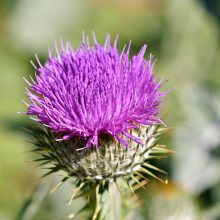
Aim of the project is the optimization of the use of industrial by-products and wastewaters as growth substrates for plant cell cultures and the optimization of their growth in economically and environmentally sustainable conditions to substantiate the possibility to build a cardoon-based cell biofactory in line with the principles of Circular Economy. Biotechnological approaches, through the RNAi strategy and/or the emerging technique of “genome editing”, on seed/leaf derived calli will be directed to increase monounsaturated fatty acids, while modifying lignin composition for accumulation of different phenolic acids as well as higher digestibility and availability of the cellulose fraction to enzymatic degradation. Furthermore, economic and environmental analysis of the production model of cardoon cells will be performed.

PRIN 2022 PNRR TOLERANT - ModulaTing hOrmone signaLling for watEr productivity and dRought resistANce in Tomato
Start date: 30/11/2023   End date: 28/02/2026

MUR

Milano
Massimo Galbiati

Project duration:
30/11/2023 - 28/02/2026
Financing body:
MUR
Project research leader:
Massimo Galbiati
Headquarters:
Milano

PRIN 2022 PNRR TOLERANT - ModulaTing hOrmone signaLling for watEr productivity and dRought resistANce in Tomato


In line with the PNRR goal of achieving “a sustainable agri-food supply chain, improve farm competitiveness and their climate-environmental performance,” TOLERANT aims at contributing to the challenge of reducing water consumption in agriculture and increasing crops resilience, with particular reference to tomato.

The core of the TOLERANT strategy is the modulation of the stress hormone signaling pathway, abscisic acid (ABA). Using innovative Techniques of Assisted Evolution (TEAs), the project is established along two main axes: (i) controlling the sensitivity the sensitivity to ABA, through the inactivation of different PROTEIN PHOSPHATASE 2C, which act as negative modulators of ABA signaling, and (ii) reducing water loss by transpiration, through the inactivation of the MYB60 gene, which acts as a transcriptional integrator of ABA responses in stomata.

Through the integrated approach of genetics, genomics, physiology and phenomics, TOLERANT aims at selecting new tomato genotypes characterized by improved water use efficiency and yield stability, even under water deficit conditions, thus contributing to the resilience of agricultural systems to the adverse effects of ongoing climate change.

SURF - Selection and development of genetic materials for the resistance to virus diseases of wheat
Start date: 01/07/2020   End date: 30/12/2023

Regione Lombardia

Milano   Website

Aldo Ceriotti

Project duration:
01/07/2020 - 30/12/2023
Financing body:
Regione Lombardia
Project research leader:
Aldo Ceriotti
Headquarters:
Milano
Project website:
Website

SURF - Selection and development of genetic materials for the resistance to virus diseases of wheat


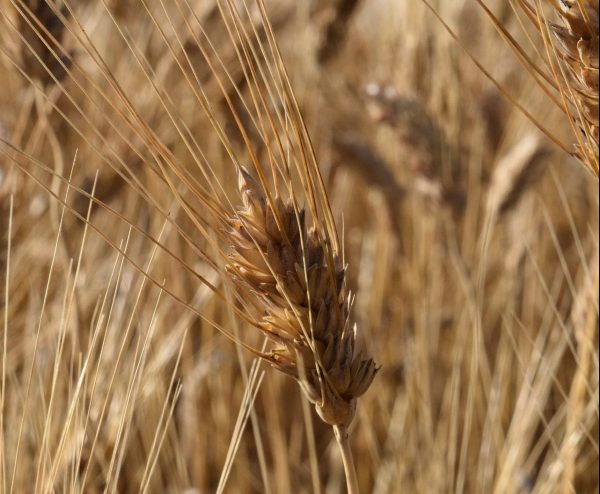
The project SURF aims to select and develop genetic materials of durum wheat (Triticum durum Desf.) for the resistance to viruses, through the use of new experimental approaches and innovative scientific technologies. The first objective of the project is the identification of durum wheat genotypes resistant to the soil-borne cereal mosaic virus (SBCMV) and the identification of resistance loci, using an approach of Genome Wide Association Study (GWAS). A panel of durum wheat genotypes already genotyped will be used. A further objective of the project is the development of durum wheat lines carrying an inactive form of a susceptibility gene for Bymovirus, through genome editing approaches. In particular, in barley the variant of a gene coding for a protein-disulfide-isomerase (PDIL5-1) causes an innate resistance to different strains of Bymovirus. The durum wheat ortholog gene of this PDIL5-1 will be used for genome editing. The resistance traits that will be identified in the project will be then available for durum wheat breeding programs.

RISINNOVA - Integrated genetic and genomic approaches for new Italian rice breeding strategies
Start date: 01/03/2011   End date: 30/10/2014

AGER

Milano
Annamaria Genga

Project duration:
01/03/2011 - 30/10/2014
Financing body:
AGER
Project research leader:
Annamaria Genga
Headquarters:
Milano

RISINNOVA - Integrated genetic and genomic approaches for new Italian rice breeding strategies


The overall objective of the “RISINNOVA” project is to provide the Italian rice industry with genetic and genomic tools for the development of more competitive rice varieties, suitable for both domestic and international markets.

The project is structured in five research Workpackages (WP):

WP1. Genetic and genomic approaches to improve protection against the main rice diseases

WP2. Genetic and genomics strategies for protection of rice from major abiotic stresses (water

shortage, salt stress, thermal stress)

WP3. Genetic and functional diversity of rice-associated microbial communities

WP4. Genomic analysis systems applied to biodiversity

WP5. Dissemination, training and technology transfer

In the framework of WP2, the IBBA activity aims to identify genes that may represent important players in the tolerant response to osmotic stress. This is achieved through: i) the physiological evaluation of several japonica cultivars for their response to osmotic stress ii) the selection of two cultivars with a contrasting phenotype (sensitive vs tolerant) iii) an RNA-Seq analysis of the transcriptomic changes occurring in leaves and roots of these two cultivars in response to osmotic stress.

PRIN 2022 TAM&SER - The puzzling mystery of tryptamine and serotonin roles in plants: a comprehensive investigation in Solanum lycopersicum.
Start date: 12/10/2023   End date: 28/02/2026

MUR

Milano, Pisa   Website

Andrea Vornoli

Project duration:
12/10/2023 - 28/02/2026
Financing body:
MUR
Project research leader:
Andrea Vornoli
Headquarters:
Milano, Pisa
Project website:
Website

PRIN 2022 TAM&SER - The puzzling mystery of tryptamine and serotonin roles in plants: a comprehensive investigation in Solanum lycopersicum.


Tryptamine and serotonin are two indolamines widely distributed in the plant kingdom and generally considered as precursors of melatonin. Many plant species accumulate high amounts of tryptamine and serotonin, even much more than melatonin. However, little is known about the biological roles of these molecules. 

Serotonin might be involved in physiological processes and protection against biotic stresses, whereas tryptamine seems to be involved in both biotic and abiotic protection. Interestingly, recent studies reported the involvement of serotonin and melatonin in endophytes-plant interactions.

The project TAM&SER aims to unravel the biological roles of tryptamine and serotonin in tomato (S. lycopersicum). 

sPATIALS3 - Improvement of agrifood productions and innovative technologies for a safer and more secure and sustainable nutrition
Start date: 01/02/2020   End date: 31/10/2022

Regione Lombardia

Milano, Lodi
Francesca Sparvoli

Project duration:
01/02/2020 - 31/10/2022
Financing body:
Regione Lombardia
Project research leader:
Francesca Sparvoli
Headquarters:
Milano, Lodi

sPATIALS3 - Improvement of agrifood productions and innovative technologies for a safer and more secure and sustainable nutrition


sPATIALS3 is a technological and research hub involving 12 CNR Institutes belonging to 4 different Departments and 4 companies. Main objectives will be: obtainment of innovative food products improved for their nutritional and functional properties; provision and implementation of precision technologies to guarantee products quality, safety and traceability; development of innovative and eco-sustainable smart– and active-packaging to minimize and reuse wastes, where possible, and to increase food preservability; provision to consumers and producers of tools for results exploitation.

NUTRAGE - Nutrition, Diet & Active Aging
Start date: 01/06/2023   End date: 31/12/2025

CNR

Milano, Lodi, Pisa, Roma   Website

Laura Pucci

Project duration:
01/06/2023 - 31/12/2025
Financing body:
CNR
Project research leader:
Laura Pucci
Headquarters:
Milano, Lodi, Pisa, Roma
Project website:
Website

NUTRAGE - Nutrition, Diet & Active Aging


With a multidisciplinary approach, Nutrage aims to promote solutions and strategies for active and healthy aging, which have significant implications for the future, well-being, and social cohesion of the country. Evidence suggests that nutrition plays a key role in promoting the prevention and delaying the onset of major aging-related diseases. Therefore, the project intends to develop new foods with high nutritional value, new dietary regimens, and specific personalized nutrition programs, and to promote new pathways to support the health, well-being, and safety of the most vulnerable populations. The specific objectives of the project are:

  • Development of agri-food (bio)technologies
  • Development of new foods with high health value
  • Green technologies for the extraction and stabilization of biocompounds
  • Identification of early biomarkers
  • Innovative strategy for active and healthy aging
  • Integrated analysis of the physiopathological bases of aging
  • Food culture and education
Istituto

Search website