StaffMassimo Galbiati


Informations


E-mail
massimo.galbiati@cnr.it

Phone
+39 0223699409

Office
Milano

Research area
BIOTEC, BIOGEN, ECOBIOS


ORCID: 0000-0002-9827-4506
Google Scholar: Profile
Research Gate: Massimo Galbiati
Scopus Author ID: 8740431900

Galbiati Massimo

Senior Researcher

Education

1995: PhD in “Plant biology and crop productivity”, Università degli Studi di Milano

1991: Bachelor degree in Agricultural Sciences, Università degli Studi di Milano

Professional experience

2020-Present: Senior research scientist at the Italian Council for Research (CNR), Institute of agricultural biology and biotechnology

2000-2020: Research Lab Manager, Department of Lifesciences, University of Milan

2018-2020: Curator of the “Crop Domestication Plant Collection”, at the “Città Studi Botanical Garden”, University of Milan

2009-2013: Scientific Director of the “Plant Model System Platform”, Fondazione Filarete-Filarete Servizi S.r.l., Milan

1998-2000: Post-doctoral Fellow, Department of Genetics and Microbiology, University of Milan

1997-1998: Research Scientist Associate, Department of Molecular, Cellular, and Developmental Biology, Yale University, New Haven (CT), U.S.A.

1995-1997: Post-doctoral Associate, Department of Molecular, Cellular and Developmental Biology, Yale University, New Haven (CT), U.S.A.

1994: Visiting Fellow, Department of Biology, Yale University, New Haven (CT), U.S.A.

Research interests

  • Plant-environment interaction and physiological responses to water deficit
  • Stomatal activity in both model systems and crop species
  • Transcriptional regulation of the plant adaptative responses to environmental stress
  • Technology transfer in agriculture
  • Dissemination activity on the topics of plant genetics and environmental sustainability

Projects in progress

Projects completed

BIO-MEMORY
Start date: 15/10/2021   End date: 15/02/2024

CNR

Milano, Lodi, Pisa, Roma
Flavia Pizzi, Aldo Ceriotti

Project duration:
15/10/2021 - 15/02/2024
Financing body:
CNR
Project research leader:
Flavia Pizzi, Aldo Ceriotti
Headquarters:
Milano, Lodi, Pisa, Roma

BIO-MEMORY


The project is organized in 3 main activities:

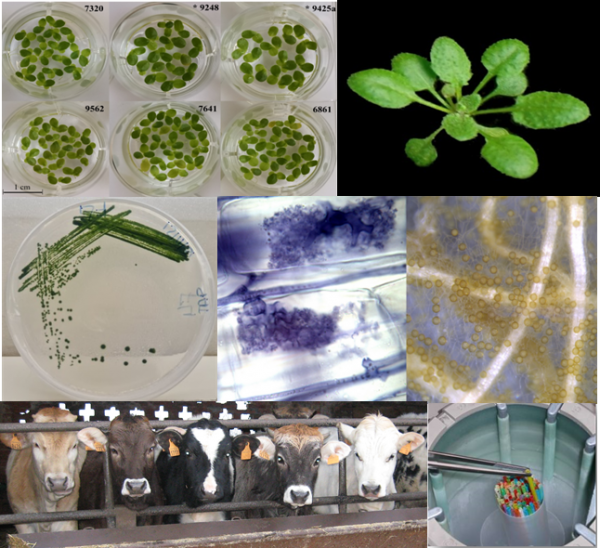
1) Implementation and updating of the BioGenRes network of biobanks, with a focus on nationally/internationally recognized collections of animal, plant or microorganism species samples (animal and plant germplasm banks, microbial strain libraries of pathogenic/toxigenic organisms, nematodes, soil and water microflora and microorganisms used in agro-industry and food (e.g. microbial starters for fermentations)).

2) Replication (rejuvenation) and expansion of material stored in collections. For plant and microbial collections: multiplication of accessions for which a small amount of material is available and rejuvenation of accessions whose seed viability data are below the expected standards (> 85%). For animal collections of zootechnical interest: collection and freezing of genetic material of local breeds to complete sampling carried out in previous projects or expansion of the number of species and breeds stored in cryobanks.

3) Biochemical, molecular, metabolic, functional and phenotypic characterization of the material conserved in the biobanks of the BioGenRes network, also in order to carry out association studies and to identify markers associated with traits linked to production and/or adaptation to biotic and abiotic stress factors.

PRIN AGRITECH (SPOKE 1) - Plant, animal and microbial genetic resources and adaptation to climatic changes
Start date: 01/09/2022   End date: 30/04/2026

MUR

Milano, Lodi, Pisa, Roma   Website

Alessandra Stella, Emanuele Capra

Project duration:
01/09/2022 - 30/04/2026
Financing body:
MUR
Project research leader:
Alessandra Stella, Emanuele Capra
Headquarters:
Milano, Lodi, Pisa, Roma
Project website:
Website

PRIN AGRITECH (SPOKE 1) - Plant, animal and microbial genetic resources and adaptation to climatic changes


Plant, animal and microbial genetic resources and adaptation to climatic changes

The resilience of agricultural and forest ecosystems under stressful conditions generated by climate change requires the enhancement and exploitation of genetic resources through state-of-the-art conservation strategies, combined with in-depth genome characterization and high-throughput phenotyping.

Activities include large-scale sequencing of accessions/breeds/strains, extensive marker-based genome descriptions, elucidation of the (pan)genome, deep phenotyping, and multi-omics characterization.

The resulting information, processed through advanced methods for the analysis, interpretation, archiving, and management of complex data, will highlight superior alleles/haplotypes, identify beneficial interactions across a variety of conditions, and define conservation units.

PRIN 2022 PNRR TOLERANT - ModulaTing hOrmone signaLling for watEr productivity and dRought resistANce in Tomato
Start date: 30/11/2023   End date: 28/02/2026

MUR

Milano
Massimo Galbiati

Project duration:
30/11/2023 - 28/02/2026
Financing body:
MUR
Project research leader:
Massimo Galbiati
Headquarters:
Milano

PRIN 2022 PNRR TOLERANT - ModulaTing hOrmone signaLling for watEr productivity and dRought resistANce in Tomato


In line with the PNRR goal of achieving “a sustainable agri-food supply chain, improve farm competitiveness and their climate-environmental performance,” TOLERANT aims at contributing to the challenge of reducing water consumption in agriculture and increasing crops resilience, with particular reference to tomato.

The core of the TOLERANT strategy is the modulation of the stress hormone signaling pathway, abscisic acid (ABA). Using innovative Techniques of Assisted Evolution (TEAs), the project is established along two main axes: (i) controlling the sensitivity the sensitivity to ABA, through the inactivation of different PROTEIN PHOSPHATASE 2C, which act as negative modulators of ABA signaling, and (ii) reducing water loss by transpiration, through the inactivation of the MYB60 gene, which acts as a transcriptional integrator of ABA responses in stomata.

Through the integrated approach of genetics, genomics, physiology and phenomics, TOLERANT aims at selecting new tomato genotypes characterized by improved water use efficiency and yield stability, even under water deficit conditions, thus contributing to the resilience of agricultural systems to the adverse effects of ongoing climate change.

PRIN 2022 MAGICOAT - Exploiting Maize Advanced GenetIc resources to reduce Cuticular and stOmatal trAnspiration for drought Tolerance
Start date: 12/10/2023   End date: 28/02/2026

MUR

Milano
Massimo Galbiati

Project duration:
12/10/2023 - 28/02/2026
Financing body:
MUR
Project research leader:
Massimo Galbiati
Headquarters:
Milano

PRIN 2022 MAGICOAT - Exploiting Maize Advanced GenetIc resources to reduce Cuticular and stOmatal trAnspiration for drought Tolerance


Despite significant improvements in maize (Zea mays L.) yield potential over the past decades, the current climate crisis raises considerable concerns over its yield stability. In the recent past, even the most productive cropping areas worldwide experienced periods of water shortage, with significant yield losses.

The cuticle and stomata play a crucial role among the morphological and physiological traits underlying drought adaptation in plants. The cuticle is a multi-layered hydrophobic structure which covers the aerial parts of plants, limiting water loss from the underlying tissues and protecting plants from dehydration.

Stomata are valves located on the epidermis of leaves, surrounded by a pair of guard cells, which allow gas exchanges between the plant and the atmosphere. The dynamic control of stomatal opening optimizes the intake of CO2 for photosynthesis and the loss of water by transpiration.

The overarching objective of MAGICOAT is to describe the molecular basis of the coordination of cuticle deposition and stomatal development, with the aim of selecting maize genotypes that are more conservative at water use and better adapted to water deficit.

BIO-BELIEF BIO-BELIEF: BIOfortification of common Bean to promote heaLthy dIEt and Food security in a context of climatic variation
Start date: 01/06/2021   End date: 31/05/2024

ERA-NET FOSC/MiPAAF

Milano   Website

Eleonora Cominelli

Project duration:
01/06/2021 - 31/05/2024
Financing body:
ERA-NET FOSC/MiPAAF
Project research leader:
Eleonora Cominelli
Headquarters:
Milano
Project website:
Website

BIO-BELIEF BIO-BELIEF: BIOfortification of common Bean to promote heaLthy dIEt and Food security in a context of climatic variation


Common bean is a staple food in many regions in the world. Bean seeds are a major source of dietary fibers, essential amino acid-rich proteins, some vitamins and often display a high content in essential minerals (Fe, Zn, Ca). However, these minerals are scarcely bioavailable, mainly due to the presence of phytic acid. Besides, about 60% of common beans produced worldwide are grown in regions subjected to water stress. The BIO-BELIEF project (ERA-NET FOSC call) aims to select new biofortified and drought resilient bean lines, in order to promote a healthy diet in a general frame of food security. The biofortification traits (incresed seed Fe and decreased phytic acid concentration) will be introgressed in the drought resilient genetic backgrounds. The innovative technology of genome editing will be applied to explore candidate genes involved in drought resilience. The biofortified lines will be exploited by preparing bean-based recipes. The BIO-BELIEF project involves: CNR-IBBA, CREA-GB and the Blumen Group company, Italy; Aix-Marseille University, France; CIAT, Kenya; University of Pretoria, South Africa; EMBRAPA, Brazil.

PRESENTATION VIDEO

NUTRAGE - Nutrition, Diet & Active Aging
Start date: 01/06/2023   End date: 31/12/2025

CNR

Milano, Lodi, Pisa, Roma   Website

Laura Pucci

Project duration:
01/06/2023 - 31/12/2025
Financing body:
CNR
Project research leader:
Laura Pucci
Headquarters:
Milano, Lodi, Pisa, Roma
Project website:
Website

NUTRAGE - Nutrition, Diet & Active Aging


With a multidisciplinary approach, Nutrage aims to promote solutions and strategies for active and healthy aging, which have significant implications for the future, well-being, and social cohesion of the country. Evidence suggests that nutrition plays a key role in promoting the prevention and delaying the onset of major aging-related diseases. Therefore, the project intends to develop new foods with high nutritional value, new dietary regimens, and specific personalized nutrition programs, and to promote new pathways to support the health, well-being, and safety of the most vulnerable populations. The specific objectives of the project are:

  • Development of agri-food (bio)technologies
  • Development of new foods with high health value
  • Green technologies for the extraction and stabilization of biocompounds
  • Identification of early biomarkers
  • Innovative strategy for active and healthy aging
  • Integrated analysis of the physiopathological bases of aging
  • Food culture and education
Istituto

Search website