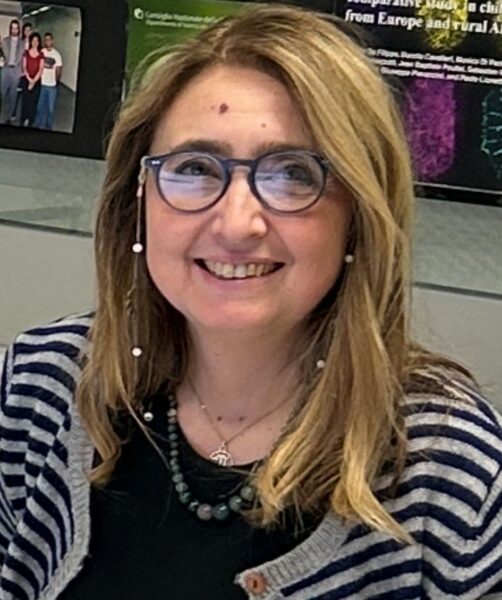
StaffCarlotta De Filippo


Informations


E-mail
carlotta.defilippo@cnr.it

Phone
+39 0552759322

Office
Pisa

Research area
QUALY


ORCID: 0000-0002-2222-6524
Google Scholar: Profile
Research Gate: Carlotta De Filippo
Scopus Author ID: 55964602400
WoS Researcher ID: AAB-5805-2019

De Filippo Carlotta

Director of Research

Education

2018: National Scientific Qualification as Associate Professor of General Microbiology (05/I2, BIO19).

2003: Visiting Scientist at Bauer Center for Genomic Research, Harvard University (Cambridge, MA, USA)

2003: PhD in Pharmacology and Toxicology (University of Florence)

1999-2000: Visiting PhD student at Harvard School of Public Health (Boston, MA, USA)

1995: M.Sc. in Biology (University of Florence)

Professional experience

2023–Present: Research Director (Dirigente di Ricerca), Institute of Biology and Agricultural Biotechnology (IBBA–CNR), Pisa Unit, Strategic Area “Food and Nutrition”2020-2022: Senior Staff Researcher at CNR-IBBA, Pisa, Italy

2016-2020: Staff Researcher at CNR-IBBA, Pisa, Italy

2015-2016: Research fellow at CNR-IBIMET, Florence, Italy

2011-2015: Staff Researcher, Dep. Food Quality and Nutrition, Fond. E.Mach, San Michele all’Adige (TN), Italy

2006-2011: Research fellow in Nutrigenomics, Dep. of Preclinical and Clinical Pharmacology, University of Florence Italy

2003-2006: Post-doctoral fellow, Dep. of Preclinical and Clinical Pharmacology, University of Florence, Italy

Research interests

Research activities integrate functional genomics, toxicology, metagenomics, and metabolomics to investigate the role of diet and the gut microbiota in modulating intestinal inflammation and the risk of non-communicable diseases, including cancer, through a translational approach combining in vitro systems, in vivo animal models, and studies in patients and human volunteers.

The main research lines include: (i) analysis of the impact of diet on the composition and function of the gut microbiota in populations with different dietary patterns, including rural communities, and the contribution of fermented foods to healthy and sustainable dietary models; (ii) investigation of microbiota–host interactions in autoimmune, neurological, metabolic, and inflammatory diseases, aimed at identifying disease-associated microbial profiles and developing targeted dietary interventions; (iii) promotion of sustainable nutrition, including the reuse of food by-products, to support vulnerable populations; (iv) evaluation of the effects of dietary and probiotic interventions, including innovative dietary patterns such as the pescatarian diet, on gut microbiota health; and (v) contribution to food risk assessment and food safety activities in collaboration with national and international institutions, including EFSA.

Projects in progress

FEED - From Edible sprouts to hEalthy fooD
Start date: 01/06/2023   End date: 31/05/2027

Unione Europea

Milano, Pisa   Website

Carlotta De Filippo

Project duration:
01/06/2023 - 31/05/2027
Financing body:
Unione Europea
Project research leader:
Carlotta De Filippo
Headquarters:
Milano, Pisa
Project website:
Website

FEED - From Edible sprouts to hEalthy fooD


Health and sustainability are increasingly central to the agri-food sector, as governments and consumers seek effective strategies to prevent chronic diseases through healthier lifestyles. In this context, the FEED project promotes the Mediterranean diet by fostering a new generation of functional foods enriched with bioactive compounds.

The project focuses on fresh sprouts from different botanical origins, including traditional, local, and wild edible species, which represent an improved nutritional source compared to seeds due to the germination process, enhancing beneficial bioactive compounds while reducing antinutrients. FEED aims to develop innovative food ingredients and functional foods that meet consumer demand for health benefits while ensuring environmentally friendly production processes. Given the high perishability of fresh sprouts, the project also develops bio-based and biodegradable active packaging solutions to improve food safety and extend shelf life. Through a multidisciplinary approach, FEED combines the rediscovery of culturally relevant plant species with advanced technologies (in vitro and in vivo models), alongside a deep characterization of sprouts’ bioactive, antioxidant, immunomodulatory, and prebiotic properties.

FEED is a 36-month project funded by the European Union under the PRIMA programme, supporting sustainable resource use, economic growth, and stability in the Mediterranean region.

Projects completed

BIO-MEMORY
Start date: 15/10/2021   End date: 15/02/2024

CNR

Milano, Lodi, Pisa, Roma Montelibretti
Flavia Pizzi, Aldo Ceriotti

Project duration:
15/10/2021 - 15/02/2024
Financing body:
CNR
Project research leader:
Flavia Pizzi, Aldo Ceriotti
Headquarters:
Milano, Lodi, Pisa, Roma Montelibretti

BIO-MEMORY


The project is organized in 3 main activities:

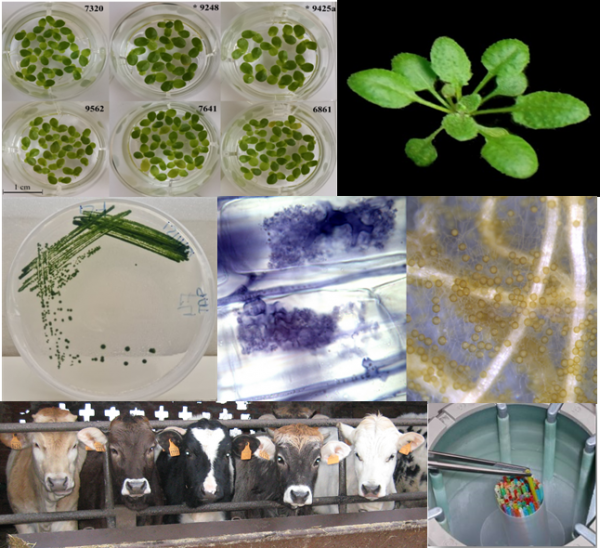
1) Implementation and updating of the BioGenRes network of biobanks, with a focus on nationally/internationally recognized collections of animal, plant or microorganism species samples (animal and plant germplasm banks, microbial strain libraries of pathogenic/toxigenic organisms, nematodes, soil and water microflora and microorganisms used in agro-industry and food (e.g. microbial starters for fermentations)).

2) Replication (rejuvenation) and expansion of material stored in collections. For plant and microbial collections: multiplication of accessions for which a small amount of material is available and rejuvenation of accessions whose seed viability data are below the expected standards (> 85%). For animal collections of zootechnical interest: collection and freezing of genetic material of local breeds to complete sampling carried out in previous projects or expansion of the number of species and breeds stored in cryobanks.

3) Biochemical, molecular, metabolic, functional and phenotypic characterization of the material conserved in the biobanks of the BioGenRes network, also in order to carry out association studies and to identify markers associated with traits linked to production and/or adaptation to biotic and abiotic stress factors.

PROB-AI: Identifying novel probiotics from sequence data by means of artificial intelligence algorithms
Start date: 01/01/2025   End date: 17/06/2026

CNR DISBA

Milano, Pisa
Filippo Biscarini

Project duration:
01/01/2025 - 17/06/2026
Financing body:
CNR DISBA
Project research leader:
Filippo Biscarini
Headquarters:
Milano, Pisa

PROB-AI: Identifying novel probiotics from sequence data by means of artificial intelligence algorithms


The objective of the PROB-AI project is to train artificial intellgence (machine learning: ML) on a reduced set of confirmed probiotic species to then be able to identify new potential probiotics from all bacterial sequences available in public databases or research projects. The results of PROB-AI will help scientists to evaluate the specific features of probiotic and non-ptobiotic bacterial species, which will facilitate the discovery of new probiotics to be used in the biomedical and pharmaceutical sectors. Furthermore, PROB-AI will validate experimentally the new probiotics detected in silico by the algortihms, by using in vitro and in vivo validation approaches, and by highlighting the fundamental characteristics that tell apart symbiotic from pathogenic microorganisms in the human digestive tract. The use of ML for the accurate identification of novel probiotics is a highly innovative approach, still underexplored in the field of microbiology.

sPATIALS3 - Improvement of agrifood productions and innovative technologies for a safer and more secure and sustainable nutrition
Start date: 01/02/2020   End date: 31/10/2022

Regione Lombardia

Milano, Lodi
Francesca Sparvoli

Project duration:
01/02/2020 - 31/10/2022
Financing body:
Regione Lombardia
Project research leader:
Francesca Sparvoli
Headquarters:
Milano, Lodi

sPATIALS3 - Improvement of agrifood productions and innovative technologies for a safer and more secure and sustainable nutrition


sPATIALS3 is a technological and research hub involving 12 CNR Institutes belonging to 4 different Departments and 4 companies. Main objectives will be: obtainment of innovative food products improved for their nutritional and functional properties; provision and implementation of precision technologies to guarantee products quality, safety and traceability; development of innovative and eco-sustainable smart– and active-packaging to minimize and reuse wastes, where possible, and to increase food preservability; provision to consumers and producers of tools for results exploitation.

MEATIC - Faecal microbiome as determinant of the effect of diet on colorectal-cancer risk: comparison of meat based versus pesco-vegetarian diets
Start date: 30/04/2018   End date: 29/04/2021

JPI HDHL-INTIMIC

Pisa   Website

Carlotta De Filippo

Project duration:
30/04/2018 - 29/04/2021
Financing body:
JPI HDHL-INTIMIC
Project research leader:
Carlotta De Filippo
Headquarters:
Pisa
Project website:
Website

MEATIC - Faecal microbiome as determinant of the effect of diet on colorectal-cancer risk: comparison of meat based versus pesco-vegetarian diets


Colorectal cancer (CRC) is strongly affected by diet, with red and processed meat increasing risk. The aim of the project is to understand the role of the intestinal microbiome as determinant of the effect of diet on colorectal cancer risk and to identify specific microbiome/metabolomic profiles associated with cancer risk. We focus our project on red and processed meat based-diets whose consumption is considered a risk factor in colon carcinogenesis. Importantly, although various mechanisms have implicated in such risk, it is still not clear whether intestinal microbiota plays a role in this process. We are comparing in humans and experimental animals, a high-risk meat-based diet (MBD) with a pesco-vegetarian diet (PVD) associated with a lower CRC risk and a MBD diet supplemented with tocopherol (MBD-T medium risk). Moreover, we will perform a transplant of faeces from rats fed the three diets into germ–free rats. The intestinal microbiome and metabolomics profiles associated with these diets will be correlated with carcinogenesis measuring surrogate biomarkers in the humans and tumorigenesis in rats fed the same diets. The results will provide fundamental insight in the role of microbiome in determining the effect of the diet, in particular red/processed meat intake, on CRC risk.
KEPT: Knowledge Platform on food, diet, intestinal microbiomes and human health
Start date: 01/10/2019   End date: 30/09/2021

JPI HDHL-INTIMIC

Pisa   Website

Carlotta De Filippo

Project duration:
01/10/2019 - 30/09/2021
Financing body:
JPI HDHL-INTIMIC
Project research leader:
Carlotta De Filippo
Headquarters:
Pisa
Project website:
Website

KEPT: Knowledge Platform on food, diet, intestinal microbiomes and human health


Studies suggest that the intestinal microbiome modulates the risk of several chronic diseases, including type 2 diabetes, allergy, cardiovascular disease, and colorectal cancer (CRC). Dietary factors are related to chronic disease risk, and they have been suggested to modulate the composition and function of the gut microbiome. However, detailed knowledge on the relationship of diet, the microbiome, and chronic disease risk is still limited. The overarching aim of the knowledge platform is to foster studies on the microbiome, nutrition and health by assembling available information in the field of microbiome research in food, nutrition and health in a comprehensive way, which also includes other disciplines (e.g. food science, metabolomics) that are relevant in the context of microbiome research. The goal is to make this information findable, accessible, interoperable and reusable (FAIR) to the scientific community and to link and provide in-depth information to various stakeholders. Through these efforts a network of transnational and multidisciplinary collaboration will emerge, that will further develop and increase the impact of microbiome research in human health. Urgent areas of research in this KP were identified to be the roles of microbiome in early infancy, during ageing and in subclinical and clinically manifest disease.

MAMMAL: Minimally-modified AMino Microbiota heALth
Start date: 01/01/2021   End date: 30/06/2023

EIT FOOD

Lodi, Pisa   Website

Carlotta De Filippo

Project duration:
01/01/2021 - 30/06/2023
Financing body:
EIT FOOD
Project research leader:
Carlotta De Filippo
Headquarters:
Lodi, Pisa
Project website:
Website

MAMMAL: Minimally-modified AMino Microbiota heALth


The MAMMAL project aims to improve infant formula by determining the impact of food processing on the generation of specific proteins included in the product which in turn promote a healthy gut microbiome.

MAMMAL will involve development of a platform using Machine Learning algorithms to process data from this research. This will enable us to connect food processing with the generation of different specific modified proteins and determine the effects these have on infants’ gut microbiota.  Companies which product infant formula will be able to use this platform to determine the most beneficial proteins to include, helping them to develop formula which promotes a healthy gut microbiome. The platform will also provide guidance on food processing and develop new targeted protein formulations which could be used within infant formula.


MIGHT: Gut Microbiota as a bioremediator for gut-health in infants
Start date: 01/01/2022   End date: 28/02/2026

CNR

Lodi, Pisa   Website

Carlotta De Filippo

Project duration:
01/01/2022 - 28/02/2026
Financing body:
CNR
Project research leader:
Carlotta De Filippo
Headquarters:
Lodi, Pisa
Project website:
Website

MIGHT: Gut Microbiota as a bioremediator for gut-health in infants


Understanding the relationship between diet, metabolites and host/microbiota is one of the key challenges in studying personalized nutrition for the more fragile segments of the population, such as children. In this regard, the incomplete digestive system of the infant fed with milk-based formulas can be affected by modifications of proteins/carbohydrates deriving from the manufacturing processes. Since the gut microbiota is crucial for homeostasis and the development of a functional immune system or the onset of intolerances, its modulation through dietary interventions is one of the most promising approaches.

The MIGHT project innovates the production of artificial milks, demonstrating that minimally modified amino acids could have specific positive outcomes (production of short-chain fatty acids, known for their anti-inflammatory properties) in the presence of some microbial species, even in the case of a reduced digestibility in the small intestine. Furthermore, IT tools (nutrition ontologies) will be developed, and data structuring will be managed through dedicated database resources. The results will be used as an interconnected set of innovative tools with the design of targeted modifications of proteins and amino acids in foods for other fragile segments of the population such as the elderly in order to improve the quality of formula and the health of the gut microbiota.


NUTRAGE - Nutrition, Diet & Active Aging
Start date: 01/06/2023   End date: 31/12/2025

CNR

Milano, Lodi, Pisa, Roma Montelibretti   Website

Laura Pucci

Project duration:
01/06/2023 - 31/12/2025
Financing body:
CNR
Project research leader:
Laura Pucci
Headquarters:
Milano, Lodi, Pisa, Roma Montelibretti
Project website:
Website

NUTRAGE - Nutrition, Diet & Active Aging


With a multidisciplinary approach, Nutrage aims to promote solutions and strategies for active and healthy aging, which have significant implications for the future, well-being, and social cohesion of the country. Evidence suggests that nutrition plays a key role in promoting the prevention and delaying the onset of major aging-related diseases. Therefore, the project intends to develop new foods with high nutritional value, new dietary regimens, and specific personalized nutrition programs, and to promote new pathways to support the health, well-being, and safety of the most vulnerable populations. The specific objectives of the project are:

  • Development of agri-food (bio)technologies
  • Development of new foods with high health value
  • Green technologies for the extraction and stabilization of biocompounds
  • Identification of early biomarkers
  • Innovative strategy for active and healthy aging
  • Integrated analysis of the physiopathological bases of aging
  • Food culture and education
PNRR ONFOODS (SPOKE 6) - Tackling Malnutrition
Start date: 01/10/2022   End date: 30/04/2026

MUR

Lodi, Pisa   Website

Carlotta De Filippo

Project duration:
01/10/2022 - 30/04/2026
Financing body:
MUR
Project research leader:
Carlotta De Filippo
Headquarters:
Lodi, Pisa
Project website:
Website

PNRR ONFOODS (SPOKE 6) - Tackling Malnutrition


Malnutrition represents one of the major contemporary public health and social challenges, with a significant impact on health, quality of life, and resilience of the most vulnerable population groups. Within this framework, the project is embedded in the activities of Spoke 06 “Tackling Malnutrition” and aims to develop targeted and sustainable nutritional strategies for children with obesity, fragile paediatric subjects, and older adults at risk. The adopted approach is multidimensional, integrating biological, nutritional, environmental, and socioeconomic factors, and highlighting the key role of the gut microbiota in the prevention and management of malnutrition.

In this context, IBBA is strongly involved through the GLUTTON and GUITARIS projects, which focus respectively on improving infant formula composition and on targeting the gut microbiota as a nutritional lever in malnutrition and associated diseases. The activities include the identification of biomarkers, the investigation of mechanisms of action of sustainable bioactive molecules, and the evaluation of innovative and personalised nutritional interventions. The results contribute to the development of sustainable dietary models, functional foods, and evidence-based tools to support food policies, as well as dissemination and awareness-raising activities targeting vulnerable populations

Istituto

Search website