This research line develops industrial biotechnologies aimed at enhancing the sustainability of agri-food systems, valorizing biomass and waste streams, and producing high-value biomolecules through the integrated use of plants, microalgae, cyanobacteria, fungi, and microorganisms. Activities include improving photosynthetic efficiency, drought tolerance, and water use efficiency in crops; exploiting advanced genetic resources to modulate cuticular and stomatal transpiration; and applying elicitation strategies to stimulate the production of secondary metabolites of nutraceutical, pharmaceutical, and industrial interest.
In parallel, microbial biorefinery processes are developed to convert agro-industrial wastes, biogenic CO₂, and process wastewaters into bio-based products within circular economy frameworks. Additional research focuses on fungal–metal interactions for applications in biotransformation and metal biorecovery.
Research integrates genetics, genomics, bioinformatics, plant and microbial physiology, bioprocess engineering, and cultivation technologies, also within the framework of national and European research infrastructures dedicated to industrial biotechnology and synthetic biology.

GoodByO aims to develop a new generation of biorefinery system that integrate agri-food waste, biogenic CO2 and bioprocess wastewater to produce bioproducts.
The project will implement this visionary concept at the bio-plant of Dutch company ChainCraft BV, in order to exploit gaseous and liquid residues as sustainable raw materials at zero cost. Thanks to the metabolic diversity of microbial catalysts, GoodByO will develop and validate four different microbial factories at TRL5.
The project will also design an in silico renewable energy model capable of supporting the variable energy demand of the entire system integrated over time, exploiting the biomethanation process as an energy grid balancing system. GoodByO will produce bio-octanoic acid, bio-hexanol, carotenoids, microbial proteins and organic fertilisers in order to meet growing market demand at competitive prices compared to benchmarks.
The ultimate goal is to encourage end-user companies to replace fossil oil and palm oil-based products with bio-based ones, helping to increase the EU’s global leadership in the manufacturing industry and also advancing the biotechnology sectors for CO2 capture and utilisation.

EU-IBISBA is a pan-European research infrastructure dedicated to Industrial Biotechnology that provides a single access point to researchers from academia and industry across the globe to integrated services for end-to-end bioprocess development. By federating European expertise and state-of-the-art research and development facilities, we promote standardization and best data practices as core elements of service reproducibility and interoperability. In doing so, EU-IBISBA accelerates the production and translation of cutting-edge knowledge into innovation for biomanufacturing.
IBISBA-IT serves as the Italian Node of EU-IBISBA, playing a distinct role across four key domains: Synthetic Biology, Green Chemistry, Sustainable Bioenergy, and Functional Food. IBISBA-IT contributes to the overarching goals of EU-IBISBA by bolstering the Italian scientific research in Industrial Biotechnology, supporting national and local authorities, and fostering training and educational initiatives.

E-crops intends to contribute to the development and dissemination of Agriculture 4.0 in Southern Italy by developing innovative technologies and methodologies to manage crops and the risks to which they are exposed. This will include integrating new technologies into the production chain through a series of pilot applications capable of monitoring and managing processes according to company objectives. Decision-making support tools will be developed through close interaction between business needs and monitoring and analysis methodologies, enabling the management of spatial variability in the field both to increase the quality of the final product (in high-value-added supply chains) and to optimize management for sustainability (in industrial supply chains). E-crops will employ an HTP phenotyping infrastructure, a leading technology in Southern Italy and unique in Italy, to build digital representations of crops in a controlled environment that will increase the level of knowledge obtainable with non-invasive survey techniques. The market and employment benefits are threefold: new markets for technology producers; Increased competitiveness and profitability combined with the hiring of new professionals; opportunities for the creation of start-ups bridging technology and agriculture.

The development of economically and environmentally sustainable strategies for the production of renewable fuels and chemical supplies is perceived as one of the most burning issues in modern society. In particular, the generation of bioproducts from renewable sources having high associated quality value is a core task of bioeconomy. The principal aims of the CYAO project are:
– the development of cyanobacterial strains having improved growth yield and biomass accumulation by the engineering of their light-harvesting capacity;
– the development of cyanobacterial strains producing and accumulating high levels of the antioxidant carotenoid astaxanthin (Asx);
– the evaluation of the feasibility of rainbow trout aquaculture in which the bioproduct Asx, extracted from the engineered cyanobacterial strains, is used as feed supplement.

The purpose of the project is to develop an integrated biological system to purify wastewater originated by anaerobic digestion of OFSMW, based on duckweed ability to tolerate high nitrogen and phosphorous concentration.
The project is proposing to develop a sustainable and completely natural system capable of achieving two objectives at the same time:
– a biological wastewater treatment;
– the transformation of some pollutants in raw materials (starch and fatty acids) that can be used in food and biochemical industries , replacing products obtained from agriculture or hydrocarbons.
In addition we would like to make a contribution to the understanding of microbiome degrading in the rhizosphere of aquatic plants used in the system, highlighting its effects on urban organic waste purification and more broadly on microbial water safety.

Aim of the project is the optimization of the use of industrial by-products and wastewaters as growth substrates for plant cell cultures and the optimization of their growth in economically and environmentally sustainable conditions to substantiate the possibility to build a cardoon-based cell biofactory in line with the principles of Circular Economy. Biotechnological approaches, through the RNAi strategy and/or the emerging technique of “genome editing”, on seed/leaf derived calli will be directed to increase monounsaturated fatty acids, while modifying lignin composition for accumulation of different phenolic acids as well as higher digestibility and availability of the cellulose fraction to enzymatic degradation. Furthermore, economic and environmental analysis of the production model of cardoon cells will be performed.

The aim of CAMFEED project is to use up to 20% of low-glucosinolate (GSL) seedcake, of the sustainable crop camelina (Camelina sativa), in the diet of broilers and laying hens in order to obtain meat and eggs with a higher content of α-linolenic acid (18:3n-3, ALA) and antioxidant compounds without affecting the eggs and meat production and the animal health and welfare.

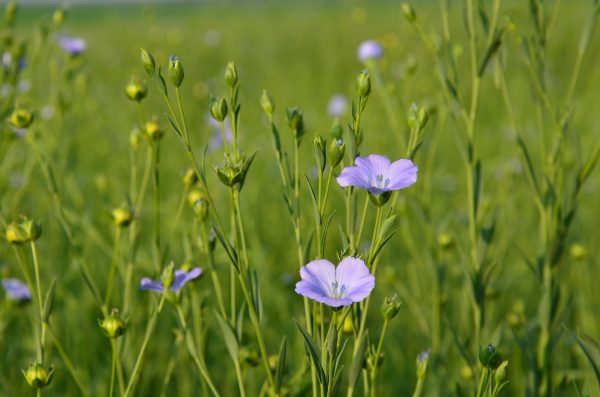
The project aims to study the possible re-introduction of traditional crops on the Lombardia territory such as hemp (Cannabis sativa L.) and flax (Linum usitatissimum L.), making their cultivation profitable again through the use of all the bioproducts obtainable from the various parts of the plant, eg: oil extracted from seeds, fiber, proteins, metabolites. In addition, the project also plans to enhance all the residues of the various transformations of hemp and flax, creating a range of bioproducts of considerable interests.

The extreme accessibility of Genetically Modified MicroOrganisms and the latency period, sometimes of years, with which any adverse effects may emerge, increases the risk that their use may occur without adequate awareness of the potential risks associated. It is therefore necessary to provide operators with an adequate technical preparation, as well as to investigate and leverage on the unconscious bias that predisposes an operator to act with timing and professionalism on biosafety issues.
With this project we intend to inform, educate, obtain feedback and carry out a targeted training for different roles; motivate – so that each person is aware of his part in biosafety – and create a network between operators whose laboratories use advanced biotechnology methods.
It will also be identified a sample of trainees to deepen, through the tools of neuro marketing (EEG, measurement of pupil dilation, etc..), the unconscious forms that give substance to the decision-making processes acted in the field of biosafety. The information collected will become an asset and will be used to update the communication styles that will be used in the future.

Poor thermal resistance of biodegradable materials currently available on the market is a major drawback for the wide range of applications of these materials. The Biobottle project developed innovative plastic bottles and bags manufactured in biodegradable materials that fulfil the requirements for packaging of different types of dairy products. The main challenge in this project was to modify the chemical structure of the biodegradable materials to increase thermal resistance without decreasing their mechanical resistance and their biodegradability properties. Reactive extrusion can be used to overcome these limitations as the material can become more resistant to creep and abrasion, among other properties. It was developed a material that is thermally and mechanically resistant, shows better properties than HDPE or PET, and is harmless after biodegradation. The developed bottles and bags, intended for packaging dairy products, are stable during pasteurisation and can withstand form-filling sealing for flexible pouches.

IBISBA 1.0 provides a coordinated network of research facilities to promote R&D in bioprocess development and support the bioeconomy. The facilities cover a wide range of experimental and in silico operations and disciplines, and together represent an R&D continuum to build quality biomanufacturing processes for industrialisation. IBISBA 1.0 aims at establishing an interoperable network of infrastructures capable of proposing R&D services to industrial biotechnology professionals. In this respect, IBISBA 1.0 has launched a Transnational Access (TNA) programme, which is conducted in the framework of open calls for projects.


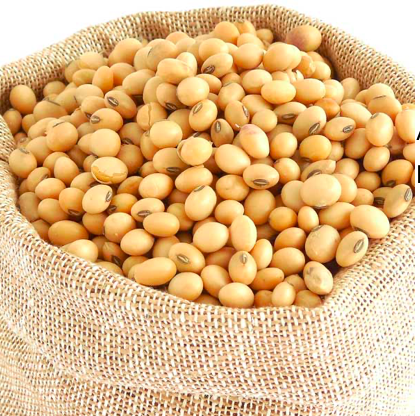
The project includes the development of a rapid assay for the determination of trypsin inhibitors in different soybean matrices (extracted soybean, extruded soybean, fermented concentrated protein soybean); the development of a rapid assay for the determination of allergens in different soya matrices; the molecular characterization of 3 soya matrices (extracted soy flour, extruded soy, fermented protein soy).

The aim of the InFlaMe project is to optimize the production of secondary metabolites of pharmacological/nutraceutical interest, the lignans which are produced at low concentration by flax plants as defense compounds against herbivores and microrganisms. To this purpose a biotechnological approach will be used starting from the production of different plant tissue cultures obtained from several diverse flax species. The obtained cultures will be induced to an increased production of lignans through the use of specific elicitors and through metabolic engineering.
In the long term this technology will provide a large scale production of high added value compounds currently limited by the low potential of producer species.

The MITICAL project aims to deepen knowlege on industrial hemp culture, focusing on the final use of two main products: seeds and flowers. The project will be based on the following activities:
The project will be hold with the collaboration of agrofarms belonging to the two lombard agriculture districts and the results obtained on seeds will be viable for feed and food industries whereas those on flowers for pharma and cosmetic sector.

The Specialization Course on Bioeconomy of the Organic Fraction from Waste and other Biomasses, now at its 11th edition, aims at preparing highly qualified professionals capable to will to:
– manage dedicated crops, by-products and the organic fraction from urban and industrial waste as renewable sources for energy and green chemistry production;
– develop energy efficiency plans based on reused production scraps and by-products;
The Course is thought to support companies in the transition towards the Bioeconomy, a sector showing today for a turnover of 330 billion euros. (data obtained from the Italian Strategy for the Bioeconomy 2020).
The Course main feature is to deal with innovative systems for the reuse of waste and production of valuable by-products.
The Course program provides combined technical and scientific knowledge together with application experience, visits to bioenergy production plants, case studies and internships in companies working in this sector.

The project aims to develop innovative molecular technologies to study the effects of genetic variability and use this information to accelerate the breeding of new resilient varieties that maintain their productive and typical characteristics in variable and extreme environmental conditions. Since genes encoding transcription factors (TFs) are the main targets on which the processes of adaptation of the genotype to the environment naturally act, the project will focus, as a “proof of concept”, on transcription factors with a proven role in the response of shade avoidance and in the flowering induction response.
Aims. To innovate the traditional agricultural sector through the use of advanced technologies that allow the preservation and valorization of the agricultural biodiversity.
Results. Development of innovative molecular tools for the genetic improvement and adaptation of vegetable species belonging to the Brassicaceae, Asteraceae and Solanaceae families through precision breeding and biotechnology.
Partnership: CNR, Istituto di Biologia e Patologia Molecolari (CNR-IBPM); CREA, Centro di Ricerca Genomica e Bioinformatica (CREA-GB), Unit of Rome.


Protein function can be understood through protein structure. The structure of a protein can inform the design of modifications resulting in increase or reduction of activity, depending on the desired goal. The service we are developing is a structure determination pipeline (from gene to protein structure). The design of synthetic proteins needs both validation by structure determination and it need to be inspired by structures of the proteins – either the ones to be modified or the products of the initial stages of design. The user will provide either the gene encoding the protein of interest, or vector/expression system and purification protocol for producing it recombinantly, or purified protein. The service will provide either of the following deliverables:

Grazie a una maggiore efficienza di fissazione dell’anidride carbonica rispetto alle piante terrestri, le microalghe possono svolgere un ruolo fondamentale nella futura economia a basse emissioni di carbonio e il loro potenziale ha suscitato un crescente interesse da parte del mondo accademico e dell’industria per lo sviluppo di tecnologie di cattura e utilizzo della CO2.
DYE ART mira alla sperimentazione di una nuova e promettente tecnologia basata su coloranti sintetici che agiscono come sistemi antenna artificiali per migliorare l’efficienza fotosintetica di alghe verdi e cianobatteri. L’obiettivo è quello di superare le attuali limitazioni della crescita autotrofa delle microalghe nei fotobioreattori, per rendere sostenibili i processi biotecnologici basati sulle microalghe, riducendo l’impronta di carbonio e aumentando la produttività complessiva.
DYE ART integra competenze multidisciplinari all’avanguardia nel campo della biologia, della biotecnologia e della fotonica. Il progetto si propone di caratterizzare, verificare e convalidare l’approccio delle antenne artificiali in due gruppi di microalghe – alghe verdi e cianobatteri – entrambi di importanza fondamentale per lo sviluppo di un’ampia gamma di processi biotecnologici e caratterizzati da una diversa configurazione dei complessi pigmento-proteina che raccolgono la luce.

In line with the PNRR goal of achieving “a sustainable agri-food supply chain, improve farm competitiveness and their climate-environmental performance,” TOLERANT aims at contributing to the challenge of reducing water consumption in agriculture and increasing crops resilience, with particular reference to tomato.
The core of the TOLERANT strategy is the modulation of the stress hormone signaling pathway, abscisic acid (ABA). Using innovative Techniques of Assisted Evolution (TEAs), the project is established along two main axes: (i) controlling the sensitivity the sensitivity to ABA, through the inactivation of different PROTEIN PHOSPHATASE 2C, which act as negative modulators of ABA signaling, and (ii) reducing water loss by transpiration, through the inactivation of the MYB60 gene, which acts as a transcriptional integrator of ABA responses in stomata.
Through the integrated approach of genetics, genomics, physiology and phenomics, TOLERANT aims at selecting new tomato genotypes characterized by improved water use efficiency and yield stability, even under water deficit conditions, thus contributing to the resilience of agricultural systems to the adverse effects of ongoing climate change.

Despite significant improvements in maize (Zea mays L.) yield potential over the past decades, the current climate crisis raises considerable concerns over its yield stability. In the recent past, even the most productive cropping areas worldwide experienced periods of water shortage, with significant yield losses.


The cuticle and stomata play a crucial role among the morphological and physiological traits underlying drought adaptation in plants. The cuticle is a multi-layered hydrophobic structure which covers the aerial parts of plants, limiting water loss from the underlying tissues and protecting plants from dehydration.
Stomata are valves located on the epidermis of leaves, surrounded by a pair of guard cells, which allow gas exchanges between the plant and the atmosphere. The dynamic control of stomatal opening optimizes the intake of CO2 for photosynthesis and the loss of water by transpiration.
The overarching objective of MAGICOAT is to describe the molecular basis of the coordination of cuticle deposition and stomatal development, with the aim of selecting maize genotypes that are more conservative at water use and better adapted to water deficit.

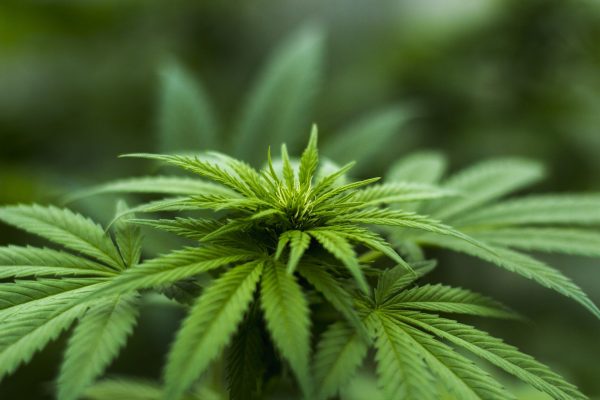
Hemp (Cannabis sativa L.) is a crop of major industrial, food, and medical interest due to its rich content of bioactive secondary metabolites, such as cannabinoids, terpenes, and phenolic compounds.
The project aims to increase the content and quality of these compounds through innovative elicitation strategies, based on the use of molecules capable of triggering plant defence responses that lead to the synthesis of bioactive compounds. In particular, elicitors of plant, bacterial, and synthetic origin will be tested during female flower development, including specific synthetic derivatives of coronalon.
The project also involves the use of chitosan nanoparticles as advanced elicitor delivery systems. In parallel, in vitro cultures of adventitious roots and hairy roots will be developed and used to test the new elicitors. Inflorescences and in vitro tissues will be characterized at biochemical, metabolic, and transcriptomic levels to elucidate the mechanisms underlying the increase in secondary metabolites. The results will contribute to the development of sustainable strategies to enhance the functional value of hemp and will pave the way for future applications of genome editing technologies.

The research activity carried out at IBBA is part of Task 8.1.2 ‘Valorisation of waste through biotechnological processes to obtain high-value molecules or new products’ and focuses on the exploitation of photosynthetic organisms, such as microalgae (Chlorella sorokiniana and Chlorella vulgaris) and duckweeds (Lemna minor, Lemna gibba) for the treatment of dairy wastewaters coupled with the production of biomasses that can be valorised for their protein content and high added-value compounds.
The project also envisages the metagenomic characterisation of microbial consortia associated with the photosynthetic organisms during wastewater treatment and the isolation and characterisation of local microalgal strains from the dairy plant washing waters.

This project aims to fill some knowledge gaps on the interaction mechanisms between fungi and these rare metals and metalloids.
FUN METALS intends to investigate how fungi can mobilise these elements, accumulating or translocating them, or in which forms they can be compartmentalised in the fungal cells. The project aims to investigate which transformations those metals might undergo by fungal action.
The results will provide new insights into the physicochemical and biochemical mechanisms involved in the interaction between fungi and rare metals. These findings will stimulate new ideas for biotechnological applications to recover these elements from industrial and electronic waste.

The most critical challenges currently faced by our society include pollution, land use and climate change, and their impacts on biodiversity and ecosystem integrity, which urgently require quantitative knowledge to be translated into actionable strategies. Given the complexity of these challenges, a multidisciplinary Earth System approach is essential, combining field and laboratory measurements, experimental analyses, data management and modeling tools across interconnected environmental domains. In this framework, ITINERIS was established as a thematic network bringing together 22 environmental Research Infrastructures to build an integrated national system for the observation and study of atmospheric, marine, terrestrial biosphere and geosphere processes.
Within WP6 – Terrestrial Biosphere, CNR-IBBA contributes to the development of harmonized and distributed platforms for metagenomic analyses, biomolecule production, and structural and functional characterization.
By promoting interoperability and data standardization in line with the IBISBA-EU roadmap, ITINERIS supports a long-term, innovative vision of Italian and European environmental research.